Car Rental Software Was Never Supposed to Be This Complicated
Car-rental businesses should not need separate software for bookings, fleet operations, contracts, accounting, staff workflows and analytics. Here is why we are building Resurve differently.
Marketing · 18 Aug 2026 · 8 min
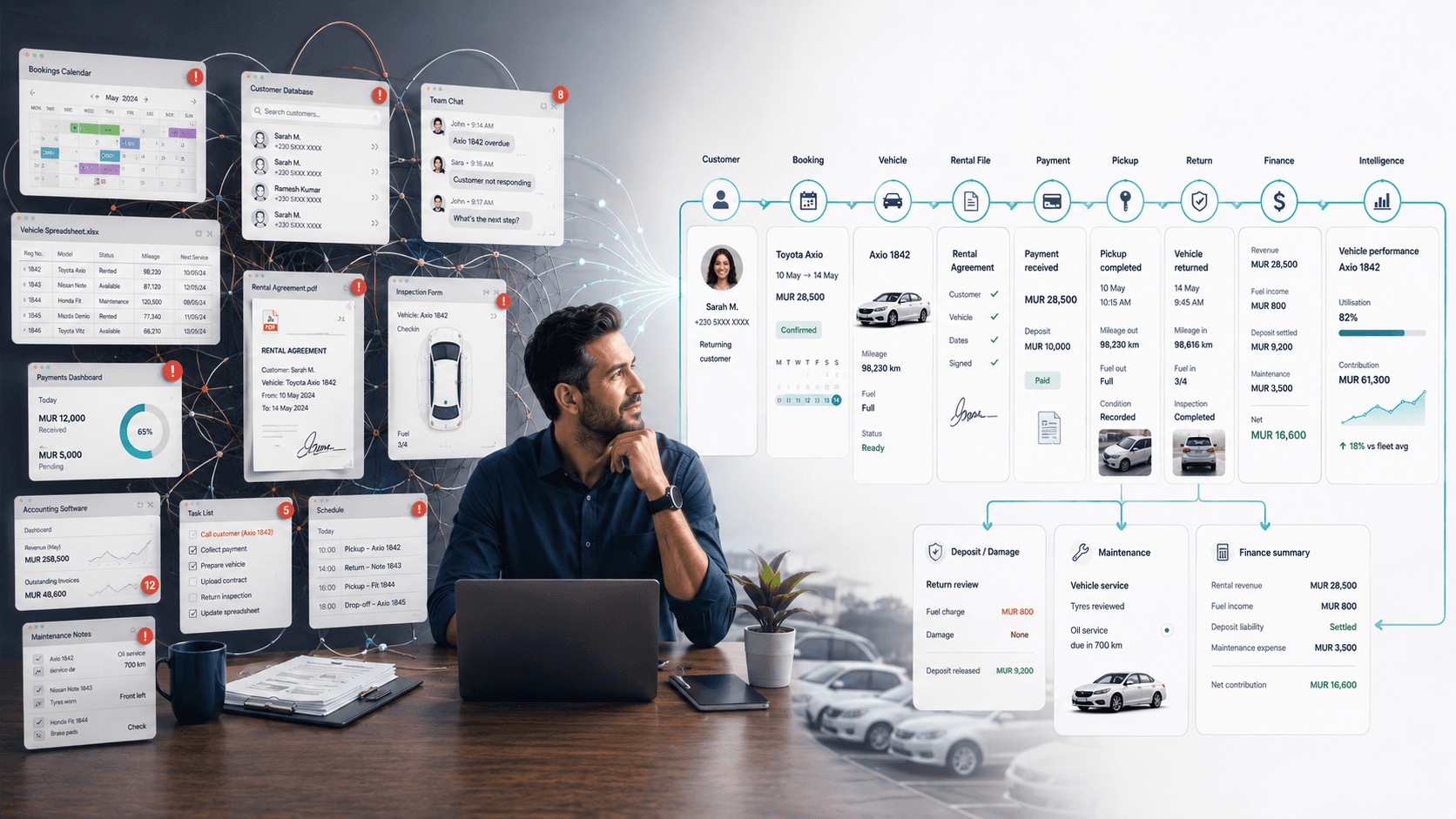
Your website lives in one place. Bookings in another. Contracts somewhere else. Payments somewhere else. Accounting somewhere else. Your team still uses WhatsApp.
We think there is a better way.
Running a car-rental business should be remarkably simple.
A customer wants a car.
They choose one → book it → collect it → use it → return it.
Behind that journey, the operator prepares the vehicle, verifies the documents, collects payment, manages the deposit, handles the return and gets the car ready for its next booking.
That is the business.
And yet somehow, the software used to run that business has become anything but simple.
A typical operator can end up with:
Website builder · Booking software · Payment provider · Spreadsheets · WhatsApp · Contracts · Forms · Accounting software · Calendar · Analytics
Each tool may work perfectly well.
The problem is what happens between them.
And after paying for all of those systems, someone still has to connect everything.
Usually, that someone is the owner.
That is the problem Resurve was built around.
Not simply:
How do we build another booking system?
But:
What would a car-rental business look like if the whole operation had been designed as one system from the beginning?
That question changes almost everything.
The owner should not be the integration layer
Think about one normal rental.
The booking system knows a customer reserved a Toyota Axio.
The payment system knows money arrived.
The spreadsheet knows which car is available.
The employee knows the customer is running late.
The maintenance record knows that vehicle needs servicing soon.
The owner knows there is another booking tomorrow morning.
Individually, everyone knows a piece of the story.
The owner is often the only person who understands the whole thing.
So the owner becomes the bridge between:
Bookings ↔ Fleet ↔ Staff ↔ Payments ↔ Customers ↔ Documents ↔ Accounting
That is a strange use of an owner’s time.
A business owner should be making decisions, building relationships and growing the company.
They should not be acting as middleware between software products.
Resurve starts with a different idea
We do not think a small or mid-sized car-rental operator should need to become a web designer, systems integrator or software administrator.
The experience should feel closer to:
Create the business → Add the cars → Invite the team → Set the rules → Start operating
That is why one part of the Resurve philosophy follows what we think of internally as the Instagram model.
Not because Resurve is a social network.
Because Instagram understood something important about human behaviour:
People should not need to design the system before they can use the system.
When someone creates an Instagram profile, they do not decide where the profile picture goes.
They do not design the feed.
They do not choose how the follow button should work.
They provide the content.
The platform provides the structure.
Humans do not want to learn software. They want to recognise it.
We are highly visual.
We learn patterns.
We remember where things are.
We associate certain shapes, colours and positions with certain actions.
Once an interface becomes familiar, we stop consciously thinking about it.
That matters enormously in business software.
A warning should look like a warning.
A completed task should feel completed.
A notification should signal that something requires attention.
A familiar card should immediately tell the employee what kind of job they are looking at.
The more decisions the interface forces someone to make, the more mental energy the business consumes.
And that cost gets multiplied across every employee, every shift and every rental.
The goal should be the opposite.
The interface should constantly reduce uncertainty.
A frontline employee should open Resurve and immediately understand:
This is what I need to do next.
A manager should understand:
These are the things that need my attention.
An owner should understand:
This is what is happening in my business.
The best workflow is often the one where nobody needs to ask:
“What am I supposed to do now?”
The website is not the business
This philosophy applies to the customer-facing side too.
A car-rental operator should not need to understand:
Hero sections · Conversion layouts · Responsive design · Page hierarchy · Button placement
They should not need to spend days designing a website before they can start accepting business.
They should be able to create their profile, add their fleet, configure how the business operates and have a professional customer-facing presence.
No theme obsession.
No endless layout decisions.
No:
“Generate me another hero section.”
The business does not want to become a web designer.
It wants to rent cars.
Standardisation is not necessarily a limitation.
When done well, standardisation is what makes software disappear.
The operator learns Resurve once.
The employee learns Resurve once.
The manager learns Resurve once.
Eventually, customers may recognise the Resurve booking experience too.
The interface stops being something anyone thinks about.
It simply becomes how the business works.
But the storefront is only the beginning
A storefront matters.
Checkout matters.
Bookings matter.
But a car-rental business does not stop existing once the customer clicks Book.
That is where the actual operation begins.
The customer has documents.
The car needs preparing.
Payment may still be due.
A deposit may need collecting.
The vehicle goes out with mileage, fuel and condition recorded.
It comes back.
Maybe it is late.
Maybe the fuel is low.
Maybe something is damaged.
Maybe the deposit needs reviewing.
Maybe the vehicle needs maintenance before its next booking.
These are not unrelated events.
They are all part of one rental.
So Resurve increasingly treats the rental itself as a living operating file:
Customer → Booking → Vehicle → Documents → Payment → Pickup → Return → Resolution
One story.
One place.
And when something goes wrong, a status is not enough
Imagine the customer is 45 minutes late.
Traditional software may update the rental to:
Late
Technically correct.
Operationally incomplete.
Because somebody now has work to do.
The real questions are:
Who needs to know? · What should they do? · Is another booking at risk? · Is money involved? · When is the problem actually resolved?
This is where Flow Dynamics comes in.
A late return can become an actual job for the right employee.
The system can surface the issue, explain why it matters and present the relevant next actions.
Contact customer · Extend rental · Charge · Waive · Mark returned · Escalate
The employee does not need to search through the system to figure out what happens next.
The work comes to them.
What we are building is not a collection of features
That distinction is important.
A collection of features says:
Here are twenty menus. Good luck.
An operating system should say:
Here is what is happening. Here is what requires attention. Here is what you can do next.
That is a very different relationship between the business and its software.
And it leads to a simple principle:
The goal is not more software. The goal is less work.
If Resurve already knows something happened, the business should not need to enter that information again somewhere else.
If something is unknown, the system should ask the right person.
If something requires action, it should surface.
If something is complete, it should get out of the way.
The complexity can exist underneath.
The user should not have to feel it.
Deep software should not feel like deep software
As Resurve becomes more capable, this may be the easiest principle to lose.
More capability usually creates more menus.
More settings.
More dashboards.
More training.
More complexity.
We want to fight that.
The depth belongs underneath the interface.
The operator experience should still feel like:
Create account → Add cars → Invite team → Start working
The frontline employee sees today’s work.
The manager sees exceptions.
The owner sees the business.
Different people · Different jobs · One operating system
That is the standard we are working toward.
Car-rental companies should run the business — not the software
Resurve began with a relatively simple idea:
Make it incredibly easy for a business to get online, accept bookings and run a purpose-built operating system without assembling everything themselves.
That idea still matters.
But the deeper principle is even simpler:
The software should adapt itself around how the business works — not force the business to spend its time managing software.
The website is not the business.
The booking widget is not the business.
The spreadsheet is not the business.
The dashboard is not the business.
The business is the business.
And our job is to make everything around it feel simpler.
That is where Resurve begins.
Altro

If Your Software Creates More Work, What’s the Point?
More features do not always make software better. This article looks at why good car rental software should handle complexity in the background while keeping everyday work simple for employees, managers and owners.
21 Aug 2026 · 3 min
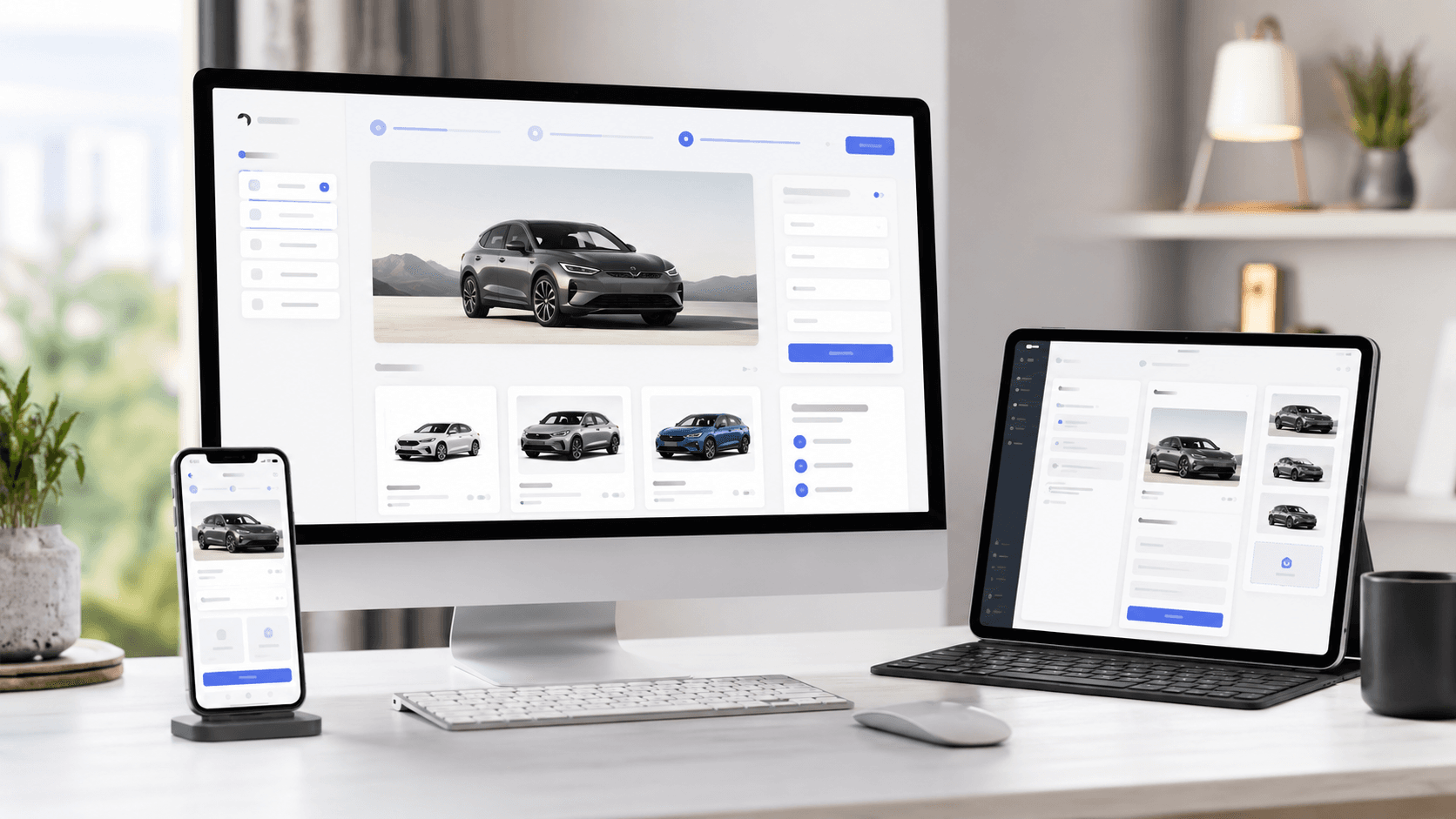
You Shouldn’t Need to Become a Web Designer to Rent Cars Online
Car rental operators should not have to build and connect complicated websites just to accept bookings. This article explains why getting online should be as simple as adding your vehicles, prices, policies and business information.
21 Aug 2026 · 3 min

Your Staff Shouldn’t Need to Ask You What to Do Next
When employees constantly rely on the owner for instructions, the business becomes harder to scale. This article looks at how clearer workflows can help staff see their work, managers see problems and owners stay focused on the business.
21 Aug 2026 · 3 min
Commenti